

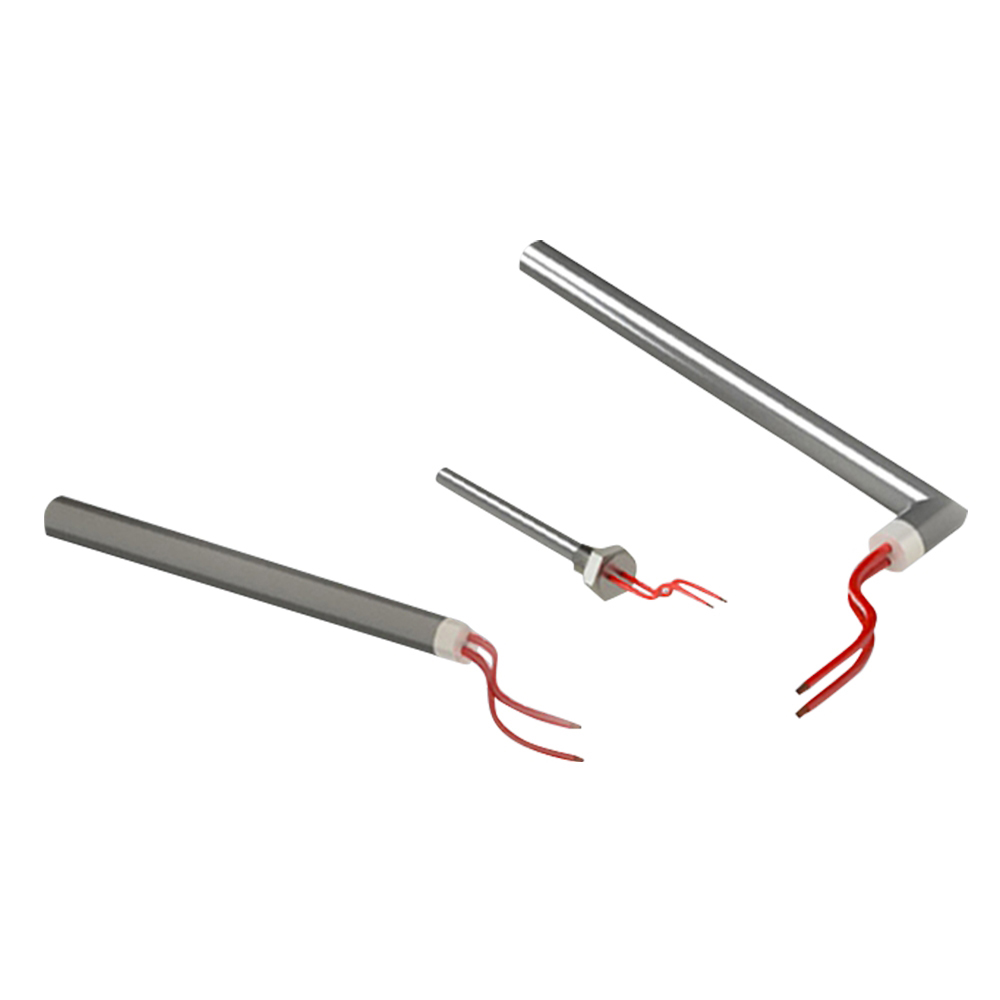
Single-Ended Tubular Heater er en alsidig og effektiv opvarmningsløsning designet til en bred vif...
Producenter af elektriske varmeelementer
-
-
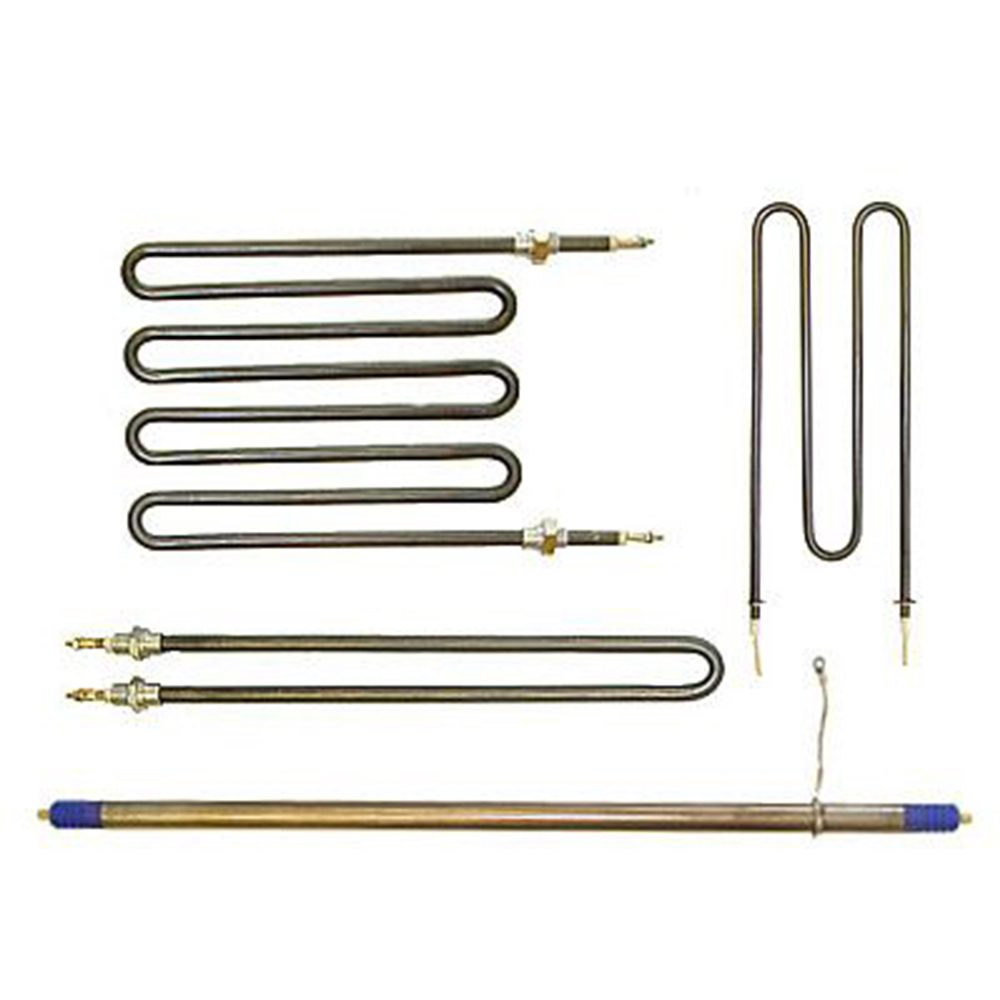 Industriel højtemperaturvarmer
Højtemperatur industriel elvarmer er en robust og pålidelig løsning designet til krævende industr...
-
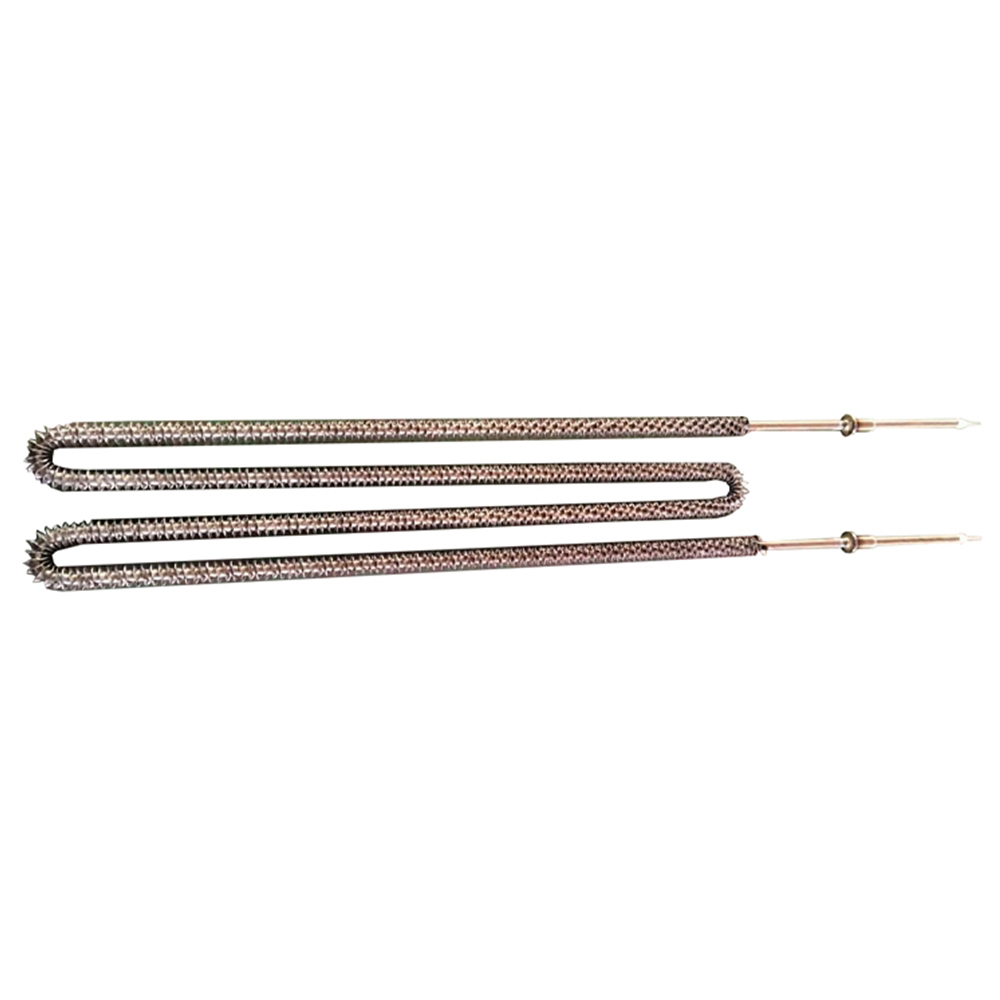 Long Life ribbet rørvarmer
Ribbed Tubular Heaters er avancerede varmeløsninger designet til at udkonkurrere standard rørform...
-
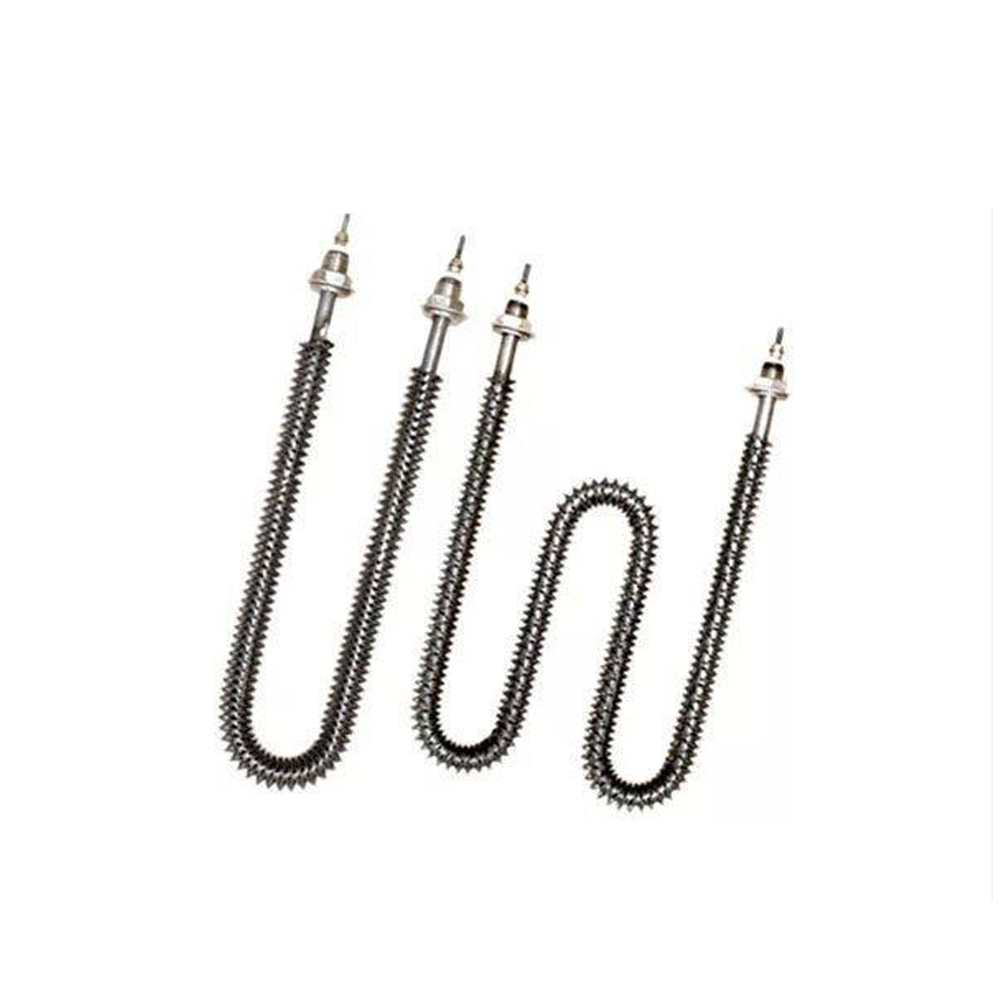 Ribbet rørformet varmeelement med elektrogalvaniserede stålfinner
Customized Ribbed Tubular Heating Element er en meget alsidig og holdbar varmeløsning designet ti...
-
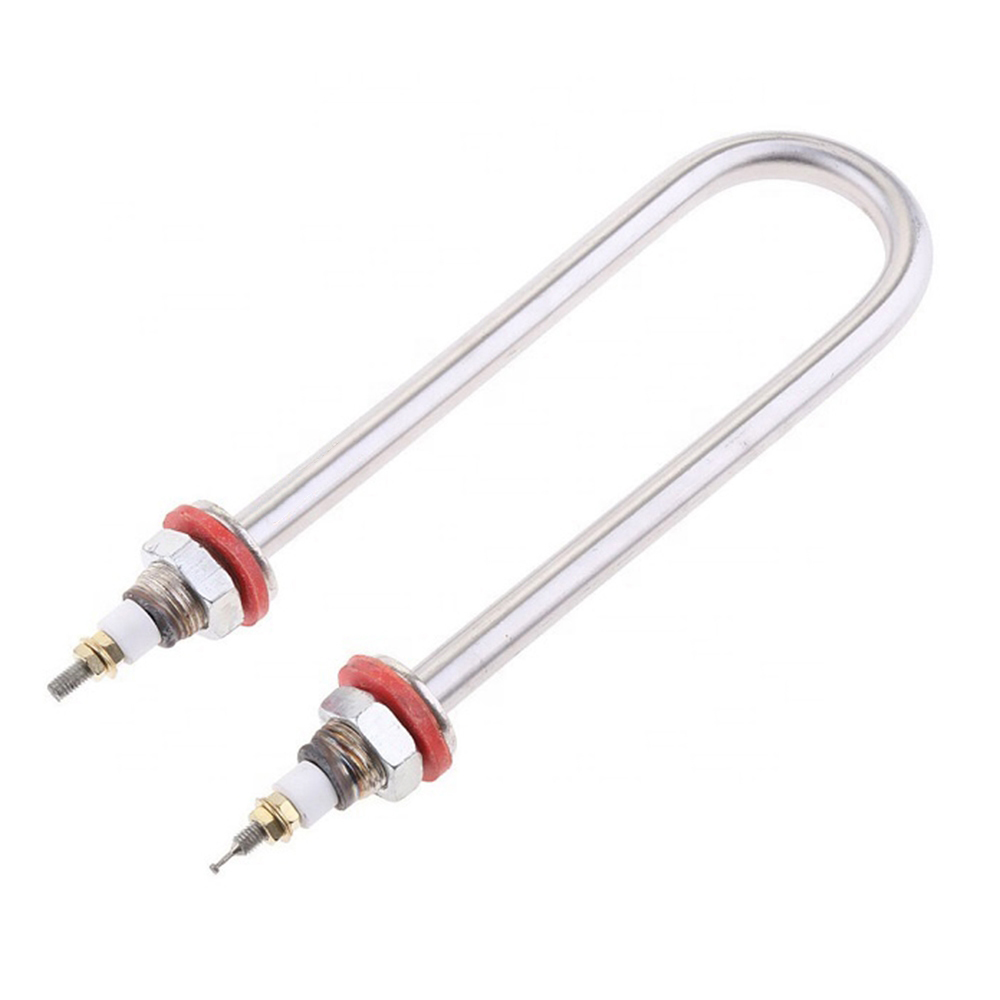 Industriel rørvarmer i lille størrelse
Small Size Industrial Tubular Heater er en kompakt, men kraftfuld varmeløsning designet til alsid...
-
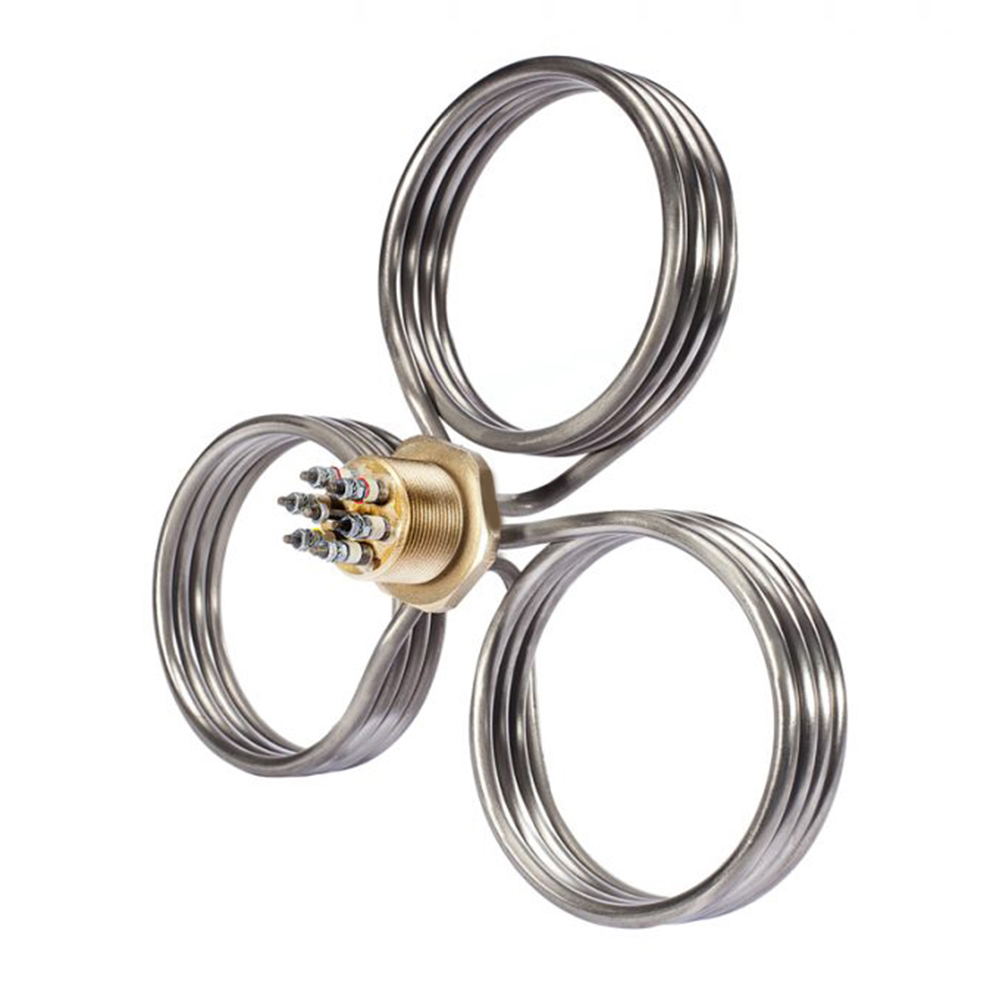 Spiralrørformet varmeelement
Spiral Tubular Heating Element er en meget holdbar og alsidig varmeløsning, designet til at imøde...
Varmeelementer er kernekomponenterne i industrielle og kommercielle varmesystemer, designet til at omdanne elektrisk energi til varme effektivt og pålideligt. Disse elementer er meget udbredt i applikationer såsom procesopvarmning, HVAC-systemer, vandopvarmning og industrielt udstyr, hvilket giver præcis og ensartet temperaturkontrol.
Konstrueret af højtydende materialer som nikkel-chrom-legeringer, rustfrit stål eller keramik, er varmeelementer konstrueret til at modstå temperaturer, høje watt-densiteter og udfordrende miljøer. De fås i forskellige former, herunder rørformede, patroner, strimler og fleksible designs, der passer til forskellige anvendelseskrav.
Moderne varmeelementer inkorporerer ofte avancerede funktioner som hurtige opvarmningsmuligheder, ensartet varmefordeling og integrerede temperatursensorer, der sikrer ydeevne og energieffektivitet. Uanset om det er til industrielle processer, husholdningsapparater eller specialudstyr, leverer varmeelementer holdbare og tilpassede løsninger til effektiv termisk styring.
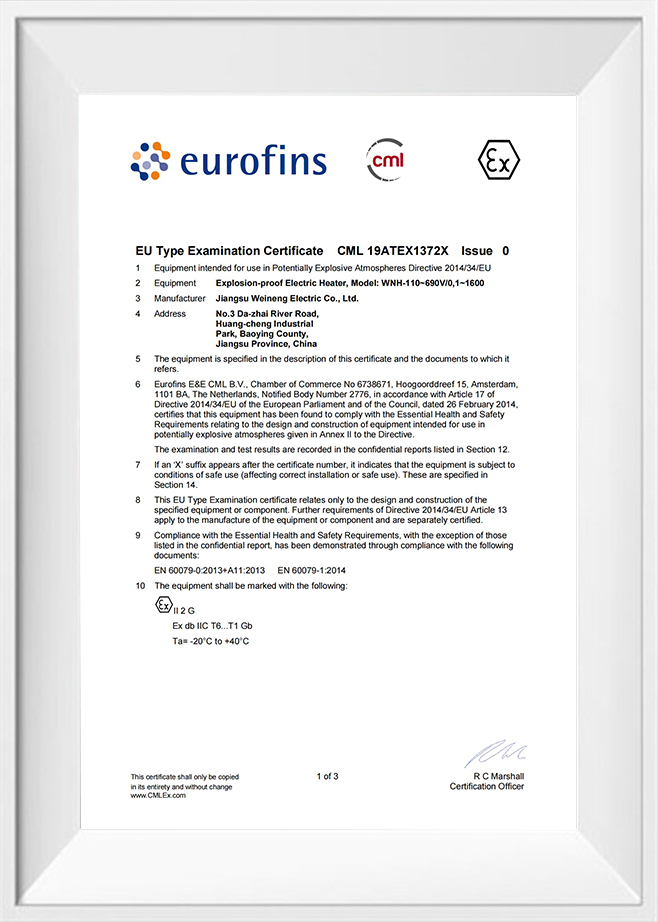
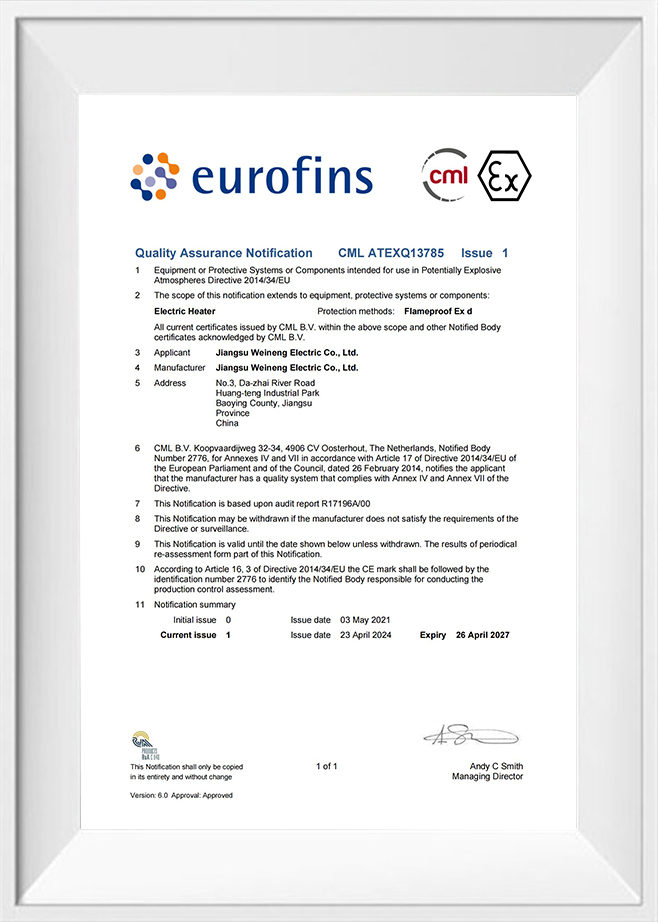
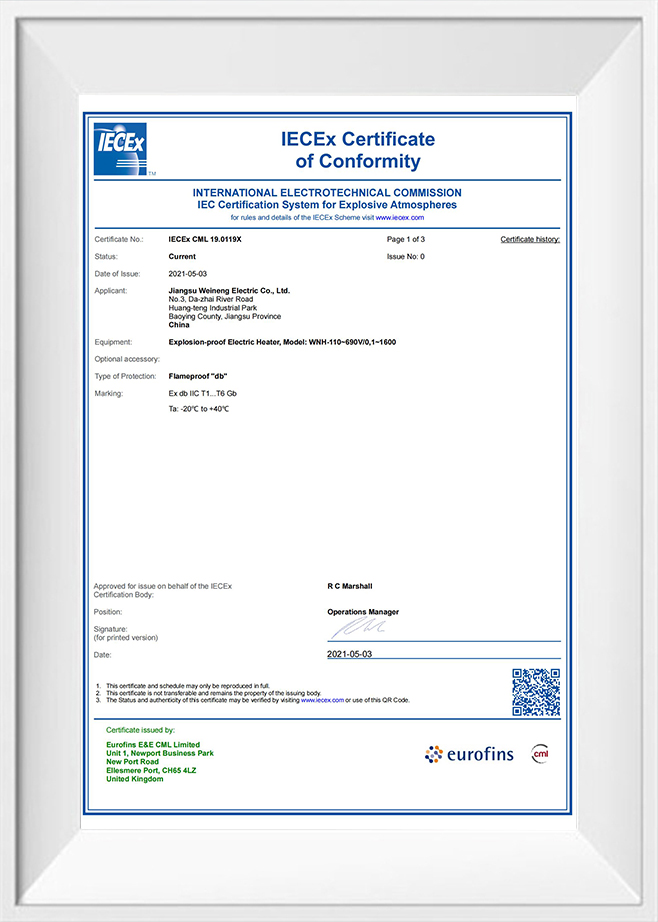
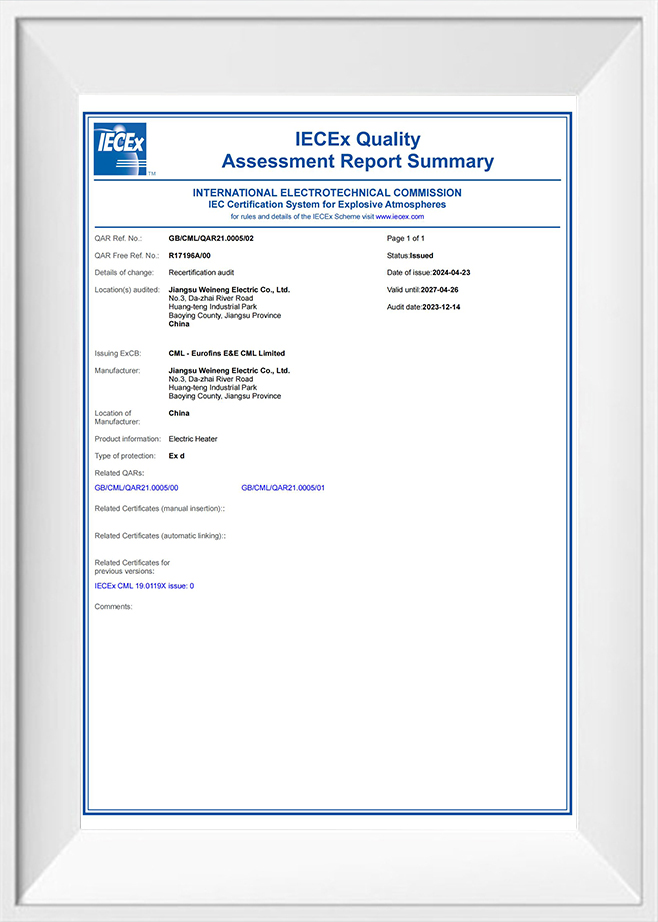
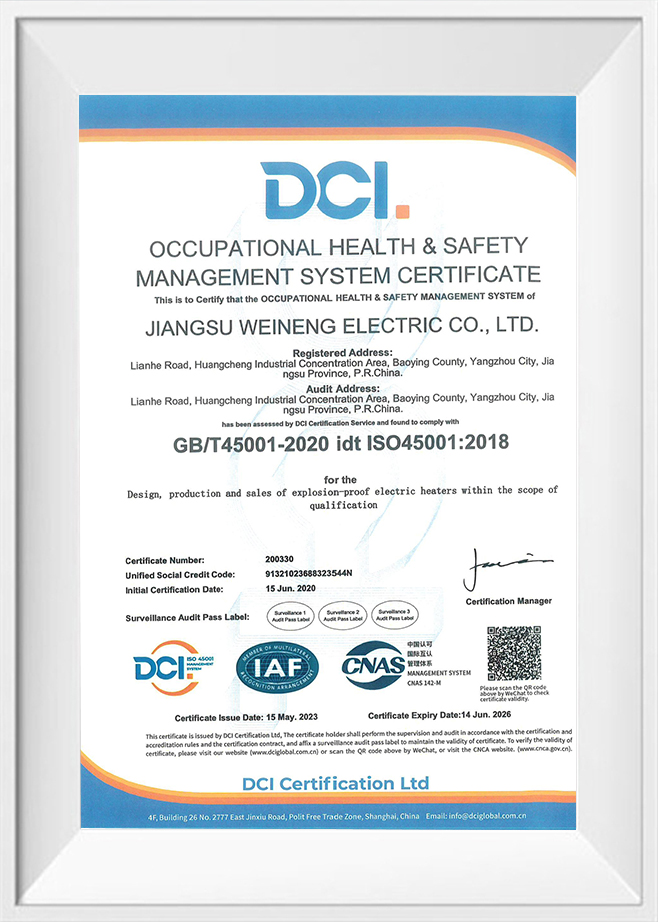
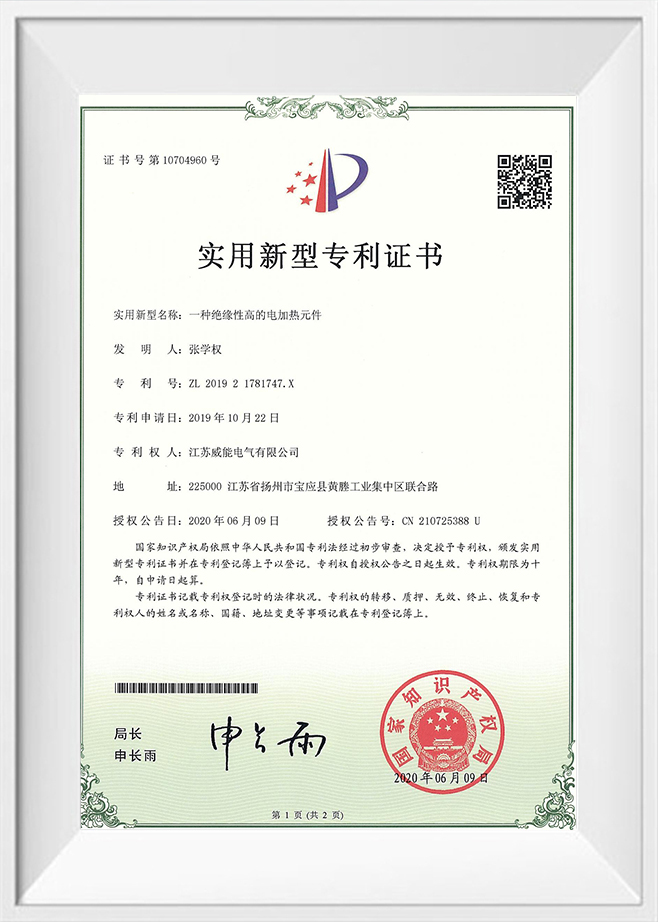
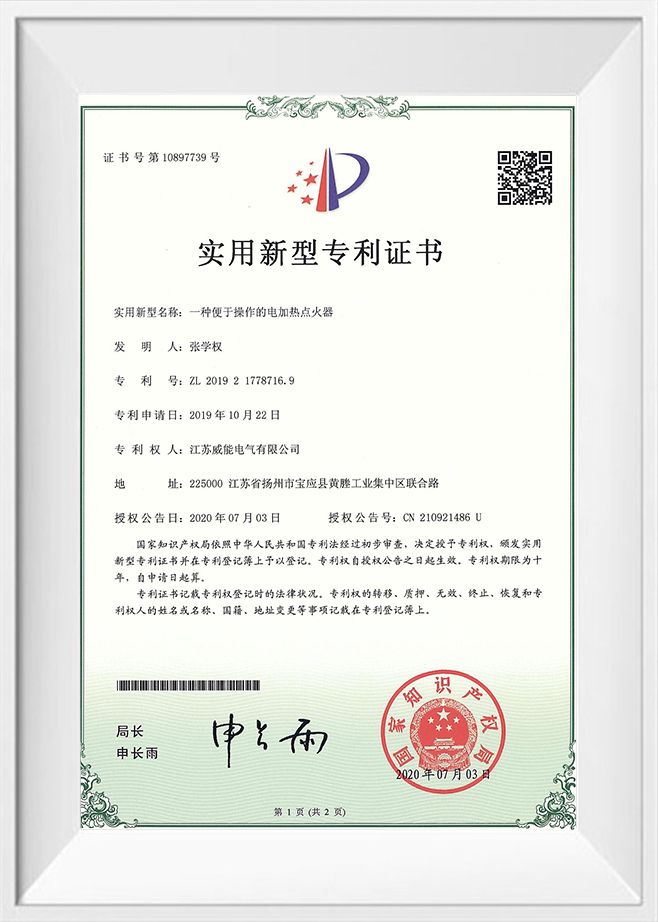
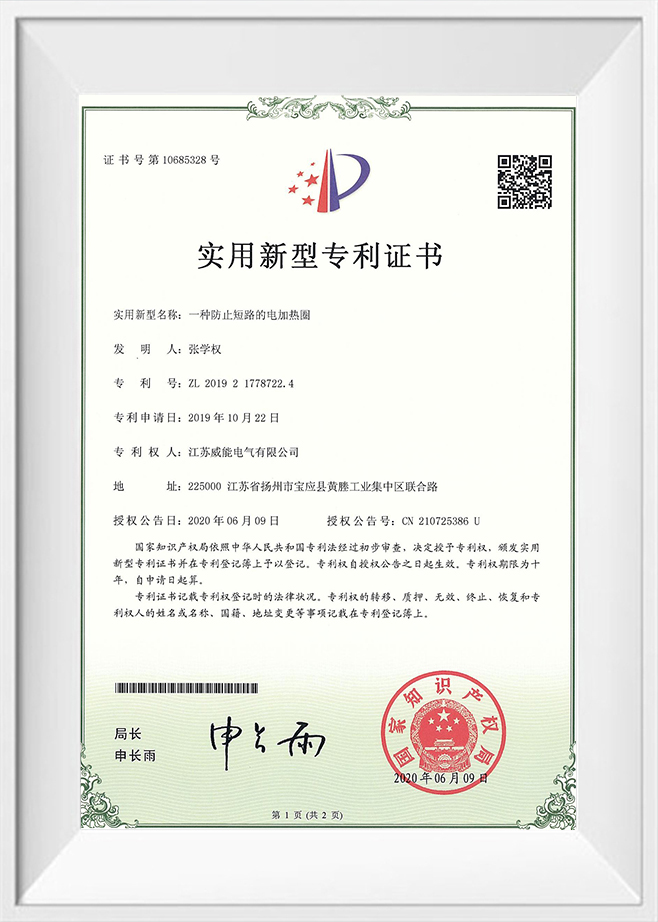
Certifikat
Jiangsu Weineng Electric Co., Ltd, etableret den 23. april 2009, er en professionel producent, der beskæftiger sig med forskning, udvikling, produktion, salg og service af elektriske varmeapparater, elektriske varmesporingskabler og styresystemer til industrien.
OM OS
Jiangsu Weineng Electric Co.,Ltd
Jiangsu Weineng Electric Co.,Ltd etableret den 23. april 2009, er en professionel producent, der beskæftiger sig med forskning, udvikling, produktion, salg og service af elektriske varmeapparater, elektriske varmesporingskabler og styresystemer til industrien.
Som Kina Producenter af rørformede varmeapparater og Fabrik for rørformede varmeapparater, Vi er beliggende i Baoying County, Jiangsu-provinsen med bekvem transportadgang. Dedikeret til streng kvalitetskontrol og omhyggelig kundeservice, er vores erfarne medarbejdere altid tilgængelige for at diskutere dine krav og sikre fuld kundetilfredshed. I de seneste år har vores virksomhed introduceret en række avancerede maskiner, herunder strømpåfyldningsmaskine, elektrisk trykprøvepumpe, måledrejebænk, LCD-punktsvejsemaskine, tørreskab, rengøringsmaskine, tørsandblæsningsmaskine, automatisk rørbukker, digitalt multimeter, isolationsmodstandsmåler, spændingsbestandig tester. Vores virksomhed insisterer på teknologisk innovation. Vi har 3 professorer inden for ingeniørvidenskab og snesevis af unge ingeniører med rig erfaring, der udgør et professionelt ingeniørteam. Vi samarbejder med universiteter og akademier for at forske og udvikle nye produkter. Derudover har vi opnået IECEx, ATEX, ISO-certifikater. Vi sælger godt i alle byer og provinser i hele Kina. Vi tilbyder Rørformet varmelegeme efter mål. Vores produkter eksporteres også til kunder i lande og regioner som Mellemøsten, Sydøstasien, Amerika og Europa. Vi byder også velkommen til OEM- og ODM-ordrer. Uanset om du vælger et eksisterende produkt fra vores katalog eller søger teknisk assistance til din applikation, kan du tale med vores kundeservicecenter om dine indkøbsbehov.Beskedfeedback
Seneste nyheder
Lær om vores branchemesseinformation og seneste begivenheder i vores virksomhed.
-
ATEX vs IECEx-certificering: Nøgleforskelle for eksplosionssikre købere
Du står foran et specifikationsark for en elektrisk el-patron, der skal ned i en tank med et brændbart opløsningsmiddel. En leverandør mærker en...14 -
ATEX vs IECEx: Nøgleforskelle og hvordan man vælger certificeret udstyr til farlige områder
Når du angiver et elektrisk varmelegeme til en flygtig processtrøm, er det første tekniske spørgsmål, der normalt kommer op, om det skal have AT...09 -
ATEX Certification Meaning: What It Means for Industrial Heating Equipment
You are standing in a chemical plant, reviewing a replacement immersion heater for a process vessel. The nameplate shows the marking II 2G Ex d ...01 -
Elektrisk varmesporing: Kabeltyper, applikationer og valgvejledning til rør og tanke
Når et procesanlæg taber varme langs et rørløb, er resultatet sjældent et pludseligt svigt. Det er et gradvist problem: en tyktflydende væske bl...24 -
Kabelforskruningsstørrelser forklaret: Metriske og PG-diagrammer, måletips og valgvejledning
Sådan fungerer dimensionering af kabelforskruninger faktisk En ingeniør bestilte en M25 forskruning til et fire-leder 10 mm² kabel, kun fo...17
Varmeelementer Brancheviden
Understanding Heating Element Materials: How Composition Impacts Efficiency and Application Suitability
When it comes to the performance and reliability of any electric heating element, the choice of material is far from a trivial decision—it forms the backbone of how well the component will function under specific operational conditions. Whether it’s a tubular heater used in heavy-duty industrial machinery or a compact strip heater integrated into a home appliance, the internal structure and elemental composition are decisive factors in ensuring long-term thermal efficiency and mechanical durability.
The most commonly used materials in heating element manufacturing are nickel-chromium alloys, stainless steel, and ceramics. Nickel-chromium, often referred to as nichrome, offers excellent resistance to oxidation and maintains stable electrical resistance even at elevated temperatures. This makes it an ideal core for many electric heating elements, especially where uniform and high-temperature heating is required over extended periods. Meanwhile, stainless steel variants provide corrosion resistance and mechanical strength, making them suitable for humid environments or applications where exposure to chemicals is a concern.
Ceramic materials, although more fragile, serve an important role in certain specialized configurations, particularly where electrical insulation is critical or where radiant heating is preferred. Their insulating properties help prevent energy losses and support higher thermal efficiencies in compact designs. Advanced ceramics also allow for higher watt densities without compromising safety, which is crucial for modern systems that demand compactness without performance loss. These materials often appear in cartridge and infrared heating elements tailored for precise thermal control.
The selection process doesn’t end with just choosing between nichrome and stainless steel. Different grades and alloying elements can significantly impact performance characteristics such as maximum operating temperature, flexibility, resistance to thermal cycling, and even weight. For example, in high-vibration industrial environments, certain grades of stainless steel can reduce mechanical fatigue over time, preventing premature failure. Similarly, nickel-rich alloys offer better creep resistance, crucial in continuous-use applications like ovens, plastic processing, or chemical reactors.
A well-designed tubular heater, for instance, relies not only on its shape or structure but on the specific interaction between its sheathing material and the internal heating wire. This synergy determines how evenly heat is transferred and how efficiently the system can reach and maintain target temperatures. Materials with poor thermal conductivity or mismatched expansion rates can introduce hot spots or stress points, leading to reduced efficiency and potential safety risks. For customers seeking performance, longevity, and reduced downtime, understanding these material dynamics is an investment in smarter sourcing.
From a manufacturer’s perspective, material choice is also closely tied to regulatory compliance and customization potential. Applications in the food, medical, and aerospace sectors, for instance, require materials that meet strict hygiene or safety standards. As a result, we not only test our heating elements for operational reliability but also ensure our materials meet global compliance requirements. This blend of precision engineering and high-quality materials is what sets apart a dependable electric heating element from a short-lived or underperforming one.
The material composition of a heating element isn't just a technical detail—it's a critical factor that defines its performance, safety, and application range. Whether you're designing a new product or sourcing for an existing system, partnering with a knowledgeable supplier who understands material science can make all the difference. With over a decade of experience in manufacturing and customizing tubular heaters and other industrial heating solutions, we help businesses find the right material match for their specific thermal challenges.
Copyright © Jiangsu Weineng Electric Co.,Ltd. Alle rettigheder forbeholdes.
OEM/ODM fabrik for elektriske varmeelementer
